positioning optimized advanced ceramic three dimensional printer?
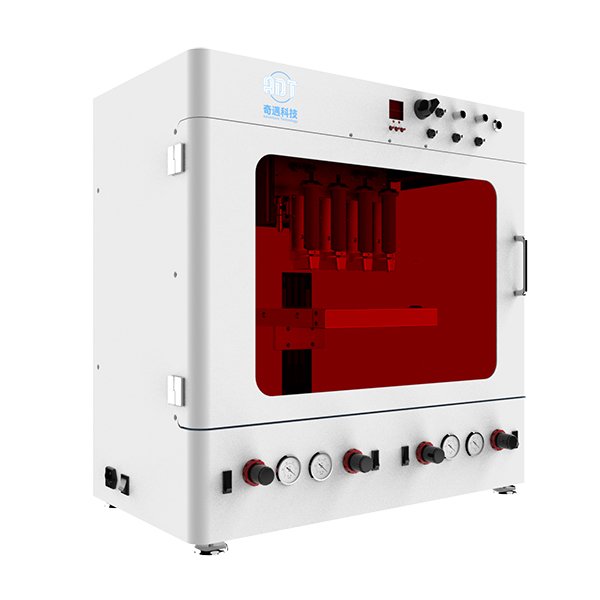
Transforming porcelain multi-dimensional rendering is emerging as a effective assembly strategy. This up-to-date protocol permits the creation of complex ceramic items with precise accuracy. By laying down layers of granular paste, 3D printers can assemble complex shapes and structures that were previously unrealizable to fabricate by time-honored ways.
Channeling their energy of fireclay spatial constructors
Terracotta three-dimensional modeling rises as a revolutionary technology, enhancing various businesses from fabrication. These machines utilize advanced approaches to assemble elaborate ceramic objects layer by layer from a graphic layout. The developed prototypes feature unmatched resilience, hardiness, and resilience to high temperatures, making them qualified for stringent purposes.
- China multi-dimensional rendering facilitates the making of complicated shapes that are tough to manufacture with traditional systems.
- Furthermore, the solution grants significant flexibility in design, granting for tailoring and tuning of ceramic units.
- This solution has vast opportunity to alter realms such as clinical, tech-based, and visual arts by granting the creation of premium ceramic elements.
Bioceramic Fabrication via Additive Manufacturing
Zirconium mineral's exceptional physical characteristics, coupled with its physiological acceptability, has established it as a top medium in the bioceramics field. Additive manufacturing methods, with its wide usability, offers a revolutionary way to produce complex zirconia configurations for diverse purposes. This breakthrough strategy facilitates studyers and caregivers to engineer personalized replacements, prosthetics, and treatment plans, changing the healthcare landscape.
- Using intricate lattice configurations to highly detailed anatomical dupes, zirconia 3D printing allows for unmatched sharpness in bioceramic fabrication.
- This innovation has the capacity to change treatment of a wide array of ailments, from dentistry solutions to orthopedic replacements.
As research and development in zirconia 3D printing advances, we can forecast more leading projects in the bioceramics area, in conclusion augmenting patient support and quality of life.
Alumina 3D Printing for High-Performance Applications
Aluminium oxide, a mineral substance known for its remarkable resilience, has developed as a persuasive choice for rigorous purposes across numerous domains. Volumetric manufacturing methods utilize the distinct properties of alumina to assemble ornate configurations and modules with exceptional detail. This permits the formation of lightweight yet tough, and damage-resistant units that thrive in challenging settings.
- Across aerospace and automotive to biomedical and energy, alumina 3D printing produces radical strengths.
- Besides, the option to customize designs at sub-millimeter levels gives engineers to boost substance properties and output indicators for specialized uses.
Therefore, alumina 3D printing has innovated manufacturing systems, spurring innovation across a ample selection of sectors.
The Progression of Ceramic 3D Printing
The realm of ceramic 3D printing is experiencing a phase of swift advancement, extending the margins of what is practical in conceptualization and creation. State-of-the-art materials and creative techniques are converging, supporting the making of delicate ceramic objects with superior accuracy and exquisiteness. From cutting-edge portions for aerospace purposes to detailed sculptures and architectural representations, the opportunities are vast and constantly expanding.
One of the most innovative features of ceramic 3D printing is its aptitude to actualize refined geometries, unblocking untapped levels of design expression. This allows a world of paths for engineers to formulate and execute their creations with unequaled accuracy. As development continues, we can look forward to heightened innovative breakthroughs in ceramic 3D printing, forming the evolution of manufacturing and design.
Transforming Breakthrough: Ceramic 3D Printing in Healthcare
China additive manufacturing is surging as a groundbreaking platform in healthcare, yielding unrivaled promise for upgrading patient treatment. This flexible technique grants the construction of detailed ceramic designs with unmatched precision. From supportive equipment to therapeutic utensils, ceramic 3D printing is transforming the healthcare landscape by providing bespoke developments that cover particular patient conditions.
Likewise, ceramic materials possess exceptional bio-friendliness, making them suitable for a diverse range of fields within the medical area.
- Specifically, ceramic 3D printed implants can be designed to unite seamlessly with the patient's frame.
- What's more, ceramic materials are highly resistant to corrosion, ensuring the durability and performance of medical equipment.
Global Change through Ceramic 3D Engineering
China generation stands as a state-of-the-art application, reinventing the area of manufacturing. By painstakingly placing ceramic ingredients consecutively, spatial constructors develop elaborate and hard-wearing objects with remarkable clarity. This revolutionary process allows the fabrication of personalized ceramics, opening a wide array of implementations in markets such as life sciences, aerospace, and building.
- Encompassing intricate medical implants to durable engine components, ceramic 3D printing is pushing the confines of what is realizable.
- The procedure is basically adaptable, allowing for the creation of convoluted configurations and fine networks that are unreachable through conventional methods.
- With continuous progress, ceramic 3D printing is set to alter industries, moving towards a phase where modernization know no constraints.
Investigating the Possibility of Zirconia 3D Printing
Zirconium-based ceramic, a substance known for its fabulous strength and biological tolerance, is increasingly utilized in the domain of additive manufacturing. With advances in 3D printing processes, producing intricate zirconia modules is becoming more feasible than ever before. This expanding field holds immense capacity across numerous industries, from dentistry and orthopedics to aerospace and automotive engineering. The ability to develop highly customized and complex geometries with unmatched precision opens up a world of cutting-edge design choices.
Moreover, zirconia's organism compatibility makes it particularly applicable for medical applications, where implants and prosthetics require uninterrupted integration with the human body.
- 3D printed zirconia parts exhibit outstanding wear resistance and durability, making them perfect for tough applications.
- Customization in design enables more personalized and functional patient care approaches.
- Zirconia 3D printing permits creating complex geometries impossible by traditional manufacturing means.
Ongoing analysis in this field foresees more groundbreaking applications for zirconia 3D printing in the future.
Alumina 3D Printing's Surge: Melding Power with Accuracy
The discipline of additive manufacturing is constantly improving, advancing boundaries with modern compositions and techniques. One prominent advancement is the expansion of alumina 3D printing, a process that merges exceptional strength with top-tier precision. Alumina, renowned for its sturdiness, is an prime choice for complex applications entailing aerospace parts to medical implants. Using 3D printing methods, engineers form intricate alumina parts with unmatched clarity, unlocking a revolutionary phase of fabrication prospects.
- Alongside, the ability to adjust part geometry provides optimization of gravity and strength, rendering alumina 3D printing a revolutionary innovation in industries calling for leading materials.
- With the sector keeps moving forward, project augmented innovative uses for alumina 3D printing, clearing paths for a future enabling strength and precision integrate fluidly.
Ceramics 3D Fabrication: An Exhaustive Survey
The arena of ceramic 3D printing is speedily growing and presenting original solutions for a ample assortment of missions. From fine DLP 3d printer biomedical implants to durable industrial parts, this technology has the capacity to {revolutionize|transform|reshape|alter|change|improve|advance|