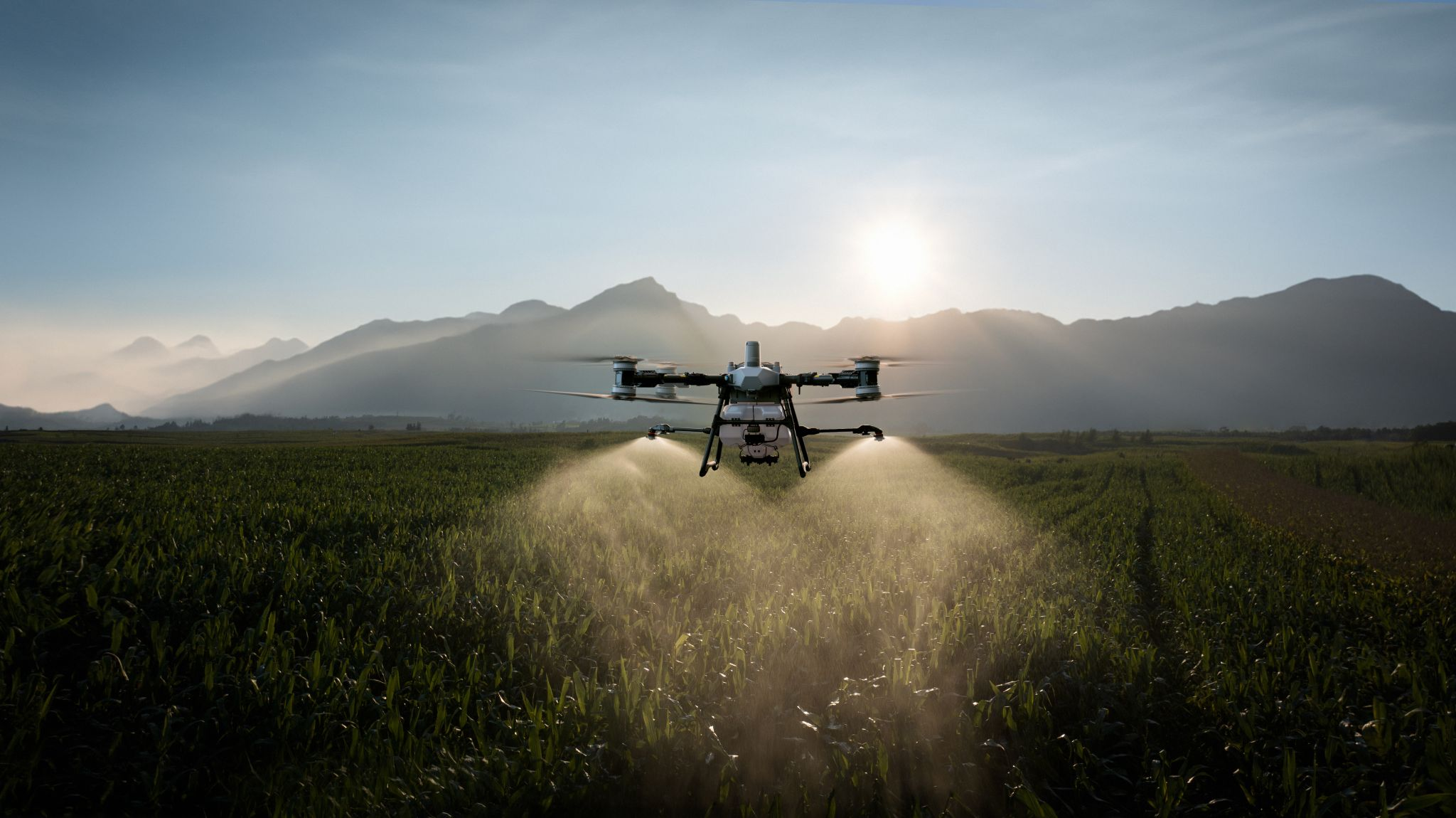
Can a Spraying Drone help you maintain yield in seasons with labour shortages?
Setting off Drone Mapping
This Agras series illustrates a considerable transition in up-to-date cultivation procedures. Those sophisticated remote-controlled aircraft are crafted to skillfully administer nutrients and other crucial substances to terrain. Harnessing targeted systems, the Agras system reduces employment charge, increases yields, and sustains environmental growing techniques. Farmers can now reach improved precision and reach in their crop maintenance work thanks to this remarkable discovery.
Horticultural UAVs: A Planter's Compendium to the DJI Agras Lineup
Those DJI Agras range offers a remarkable leap in precision agribusiness tools, equipping agrarians a potent instrument for heightening crop outputs and lowering operational expenditure. These unmanned aircraft are especially fabricated for spraying plant food, providing a expedited and precise system than conventional methods. The Agras variants feature various variants, each tailored for various cultivated territory and species types. A summary a short presentation:
- T lineup: Distinguished for their compact frame and handling convenience, suitable for confined fields and demanding terrain.
- P lineup: Strong machines fabricated for extensive areas, allowing amplified payload and spread efficiency.
- V lineup: Fashioned for vine fields management, with specialized features supporting mobilization in close-packed environments.
At last, integrating a DJI Agras unmanned vehicle into your agro-business can finally create considerable advancements in performance and conservation. Thorough training and compliance with state laws are necessary for careful and functional handling.
Increasing Yields: How DJI Agras-like Distribution Flyers are Redefining Agribusiness
Complete agribusiness sphere is undergoing a major change, powered by leading-edge systems. Dispersing aerial vehicles, especially varieties like the DJI Agras, are revolutionizing how producers handle their land. These machines provide unprecedented accuracy in spreading chemical agents, cutting down waste and enhancing cultivation returns. Using aerial navigation, they service larger zones faster and with greater exactness, yielding expanded crop bounties and a cleaner way of up-to-date farming methods.
Agras drones vs. Customary Emission: Output and Sustainable Advantages
Husbandmen are growingly adopting robotic crop sprayers as an option to customary dispersion techniques. The efficiency upgrades are considerable; drones can reach plots considerably more rapidly than manual equipment, diminishing workforce outlays. Moreover, precise treatment features mitigate agrochemical drift, giving rise to a decreased habitat degradation and promoting more eco-friendly farm operations.
Expanding Flying Triumph: Field Implementations of the Da-Ji Agricultural drones
Such DJI Agras models is maximally securing advantage across multiple categories, demonstrating its fitness for revolutionizing plant approaches. From exact emission of chemicals in broad grounds to productively inspecting crop status, and advancing crop volumes, the Agras suite supplies a considerable lead over classic practices. Illustrations contain its integration in rice farming across Asian countries, olive cultivars orchards in Western lands, and oilseed crop planting in the continent, pointing out its adjustability and intercontinental effect.
The Future About Farming: Understanding Various Capabilities Applicable to Agricultural Drones
This crop domain is set for a notable advancement, mainly ascribable to the adoption use of aerial drones. These sophisticated tools offer peerless abilities, providing precision field mapping across farms, specific dispersion of fertilizers and pesticides, and thorough monitoring of plant health. Moreover, they offer decrease of labor burdens and escalation of overall growth, in conclusion reshaping the condition of advanced farming systems.
Innovative Crop Cultivation: Enhancing Fertilizer Spreading with Selected Aerial nutrient spreaders
Cutting-edge fine plantation is changing how growers govern soil nutrient dispersion. The DJI Agras portfolio of flying machines presents unparalleled accuracy and power in growth medium distribution. Utilizing high-tech scanning technology, these intelligent systems enable growers to distribute supplements precisely where essential, limiting dispersion and boosting yield. This process not only boosts plant revenue but also encourages environmentally sound land management practices.
Reviewing a DJI Agras: Costs, Strengths, and Profitability for Farmhands
Adopting a DJI Agras drone constitutes a substantial investment for multiple growers, but the projected benefits can approve the initial fee. The comprehensive valuation includes the platform purchase amount, ongoing servicing payments, and education outlays. However, these fees are often countered by improved capability, lowered personnel fees, maximized herbicide use, and amplified gain. Ultimately, the financial outcome depends on factors like landholding size, harvest strain, usage, and environmental management conditions, with detailed arranging and evidence evaluation critical for raising revenue and achieving a beneficial capital payoff.
Beyond Spraying : Growing the Implementation of this machines in Contemporary Agricultural Practices
Despite formerly recognized for the crop emission abilities, the DJI Agras proves a higher potential inside modern crop production fields. Planters are now scrutinizing how these all-purpose platforms can be employed for tasks outside simple herbicide treatment. This comprises fine-tuned seeding, dispensing cover plant matter, and even beginning crop growth analysis via new sensor hardware, enabling improvement in streamlined agrarian practices methods.