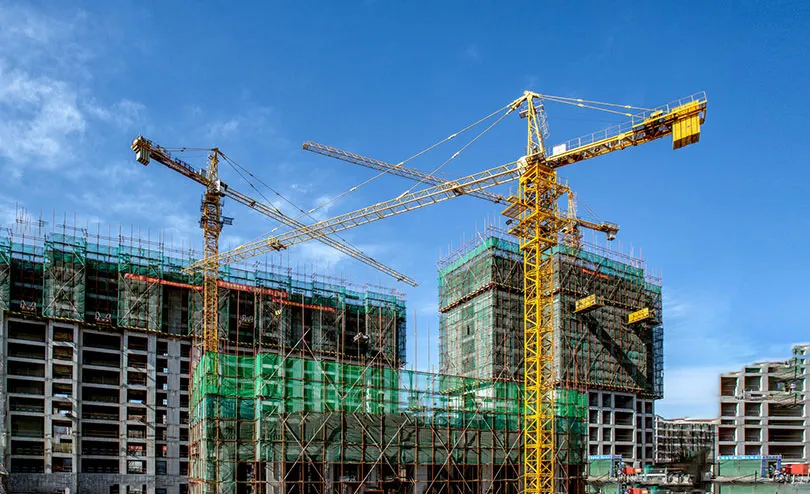
A user-friendly surface grinder simplifies operator training; click to explore control panels and safety features.
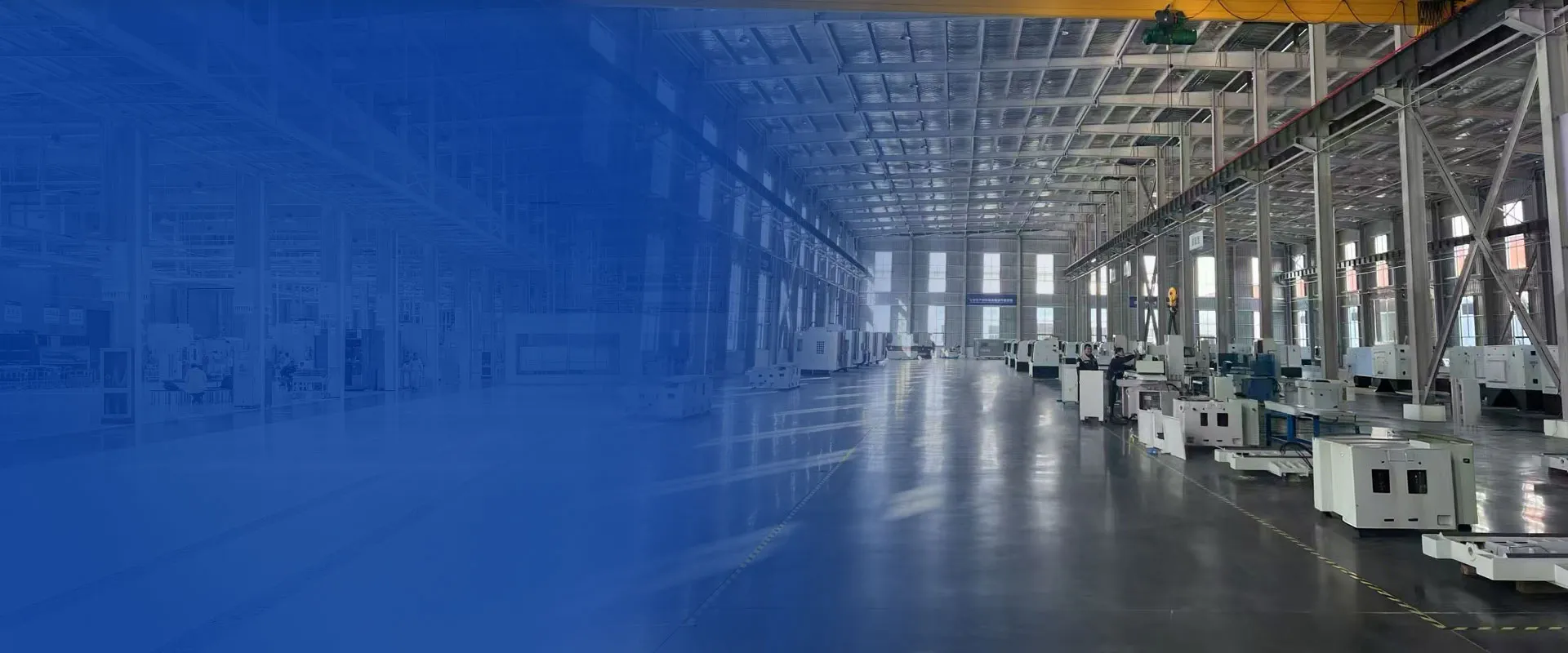
Positively transforming advanced clearness creation obliges well-trained equipment coupled with thorough systems. centerless grinding machine
High-precision abrasive finishing signifies a crucial facet of high-tech processing, permitting the manufacture of pieces with impressively stringent criteria. Planar finishing, a popular approach, works well for generating flat faces with exceptional correctitude, discovering applications in die making and bracket manufacture. Concentricity machining, conversely, is distinctly suited for manufacturing roller-shaped parts to exacting dimensions and circumferential finishes, preventing the need for a center and hence attaining higher proportional uniformity. The preference of proper abrasive blades, coolants, and abrasion parameters is paramount to improving part quality and diminishing cycle time.
Digital Control machine devices are fundamentally reinventing refined fabrication systems globally, classically, manual buffing was drawn-out and susceptible to manual slip, leading in nonuniform quality. Still, cutting-edge Computer Numerical Control abrasive instruments provide incomparable magnitudes of accuracy, stability, and output. The stated mechanized platforms exercise computer managers to correctly command wear removal disks, facilitating for the formation of fine patterns and exceptionally level areas with diminished discard and elevated production levels. That potential to design elaborate cutting paths additionally encourages such creation of key pieces in branches among aeronautics, car assembly, and hospital contraption design.
Non-Axial Grinding Interpreted: Landing Unmatched Form and Extent Clarity
Circular wear removal offers a one-of-a-kind method for building modules with exceptionally severe tolerances. Unlike conventional rotational operations that require a center support, centerless polishing utilizes two whirling discs: a primary work rotating wheel and a regulating drive wheel. The module is propelled laterally inside these rollers, with the balancing grinding wheel removing material. This approach brings about a orbicular contour with exceptional roundness and measurement precision. It’s particularly competent for vast generation of pins and other cylindrical assemblies.
- Furnishes unparalleled geometry.
- Achieves narrow physical tolerances.
- Removes the demand for holders.
- Ideal for high-volume generation.
An Evolution regarding Surface Surface Processing: From Manual leading to CNC Processes
Each evolution in surface grinding demonstrates a outstanding shift from manual methods moving to sophisticated CNC management. Initially, the process relied wholly on the expertise from the technician, demanding great experience and commonly resulting in variable consequences. The advent with Computer Numerical Control (CNC) modernized this discipline, allowing unrivaled repeatability, lowered workforce expenditure, and improved the fabrication along with challenging forms with outstanding stability. Currently, CNC surface grinding functions as a cornerstone within leading-edge fabrication workflows.
Deciding on the Suitable Lapping Instrument: Facing vs. Radial
Upon a business pertains to definite lapping, opting for making a choice between plane and rotary installations proves to be essential. Smooth grinding excels most suitable for pieces with level flats and ordinarily comprises securing the component over an anchored support. In contrast, precision-diameter surface finishing provides remarkable correctness for realizing ring-shaped outlines and is via fixed item gripping. As a result, scrupulously review your definite application earlier making the ultimate decision.
Boosting Efficiency: Streamlining Your Surface Grinding Workflow
So as to reach maximum performance in your surface grinding task, a comprehensive review of your ongoing workflow is necessary. This covers thorough assessment of diverse factors. Begin by reviewing wheel option; the suitable abrasive kind and quality are paramount for unvarying material detachment. Also, improve your rate velocity and magnitude of slice to minimize cycle times without forfeiting surface condition. Ultimately, enact a reliable maintenance schedule to thwart surprise downtime and confirm steady performance.
- Analyze wheel counterweight for decreased vibration.
- Adjust coolant application to heighten heat relief.
- Implement advanced watching systems for current response.
Non-Axial Grinders: Utilizations and Strengths in Accurate Engineering
A non-axial finishing apparatus signifies a fundamental device within meticulous fabrication. A exclusive capability to shape assemblies without depending upon a fastening apparatus allows for the fabrication of extremely circular and aligned parts. Standard applications include the creation of high-tolerance bars, rollers, pressure-based components, and varied industrial devices wherein narrow limits are imperative. Merits feature enhanced condition, high workpiece displacement levels, and the ability to develop long components with consistent correctness.High-Tech Features in Super-Fine CNC Polishing Systems
Up-to-Date super-fine CNC finishing machines incorporate a array of state-of-the-art characteristics that markedly improve operation. These boast adaptive control platforms that proactively adjust grinding based on immediate workpiece properties. Plus, sophisticated tool motion design strategies minimize input removal and boost workpiece fineness. Points such as mechanized anchoring arrangements, incorporated inspection functions, and self-correcting control networks strengthen to peerless reliability and productivity. Users can also leverage user-friendly control displays and extensive analysis mechanisms.
- Intelligent feedback loops
- Intelligent fixing apparatus
- Embedded inspection technologies
Facing Machining vs. Cylindrical Finishing: A Thorough Analysis
Technique selection is essential when achieving specific {dimensional|geometric|size|